How to Choose Skis
Choosing the right pair of skis can make all the difference in your mountain adventures. Whether you're carving groomed runs, exploring off-piste terrain, or chasing powder-filled turns, understanding ski types and key features will help you find the best skis for your needs.
Ski Types: Match Your Style and Terrain
Different skis are built for different terrain, turn shapes, and skiing styles. Here are the main types to know:
All Mountain Skis: Ideal for skiers who enjoy a mix of groomed trails, variable snow, and off-piste terrain. These versatile skis offer stability and control across a wide range of conditions.
Freestyle Skis: Built for park skiers, jumps, spins, side hits, rails, and creative skiing. Freestyle skis are often lighter, more playful, and flexible enough for tricks and switch skiing.
Touring Skis: Designed for skiers who travel beyond resort boundaries. Touring skis are lightweight for uphill movement and built to perform on untouched snow.
Freeride Skis: Built to handle deep powder, variable terrain, and steep descents. These skis often feature wider profiles and rocker for better flotation, stability, and control in off-piste conditions.
Race Skis: Designed for speed, precision, and maximum edge hold. Race skis vary by discipline, such as slalom or giant slalom, and are built for powerful turns, high-speed stability, and elite-level performance. For more race-specific guidance, reference our guide here.
Understanding Downhill Ski Dimensions
When you're shopping for skis, you'll often see a set of three numbers listed like this: 131/98/119. These numbers represent the ski’s width, measured in millimeters, at three key points:
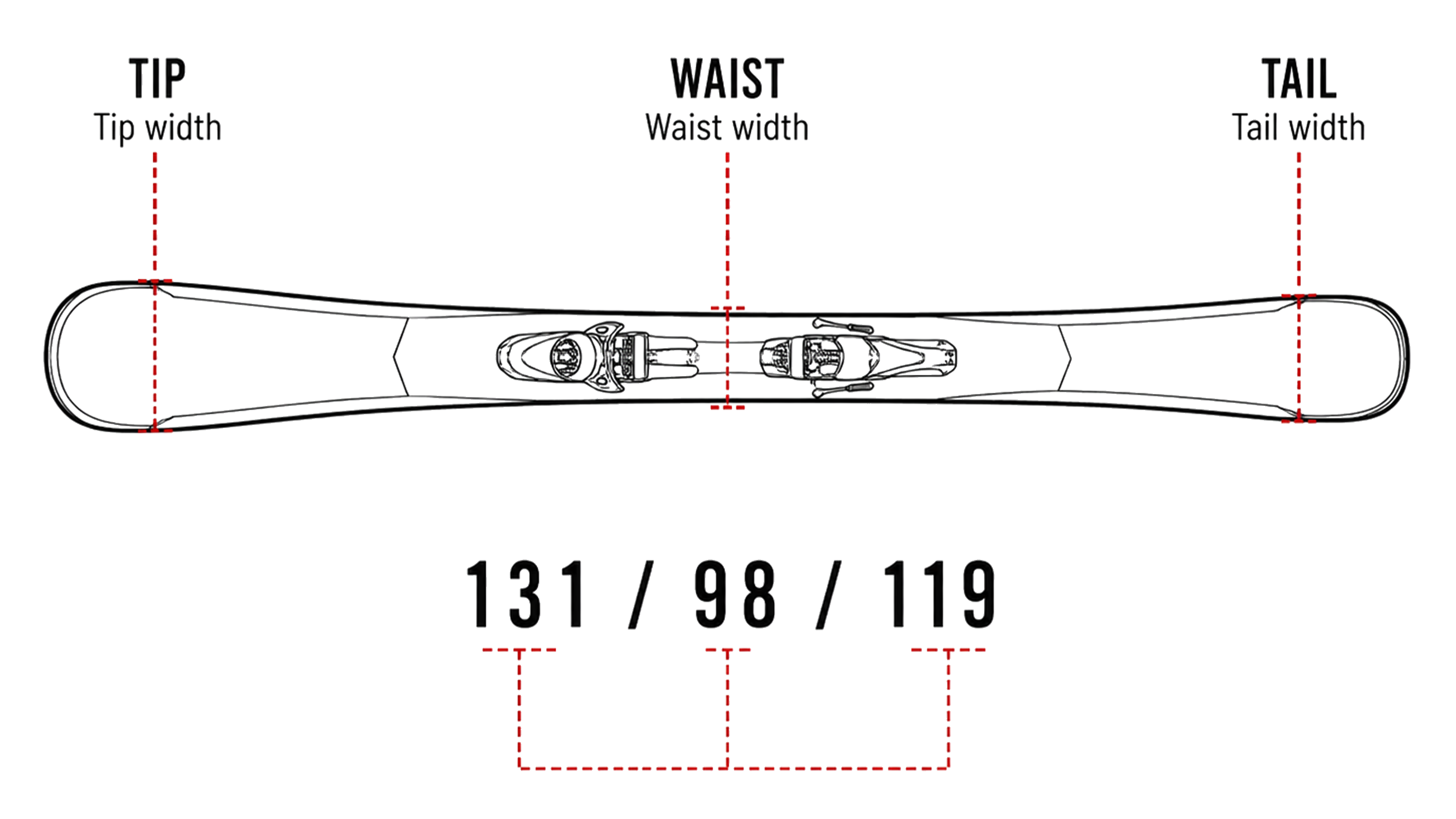
Tip: The front section of the ski.
Waist: The narrowest point under your boot.
Tail: The back section of the ski.
These measurements give you a quick snapshot of how the ski is designed and what kind of terrain it’s best suited for.
Waist: The Most Important Width
Out of the three measurements, waist width has the biggest impact on how a ski performs.
Narrow waist, around 60–85 mm: Quick and agile. Great for groomed runs and hard-packed snow. These skis are easier to shift from edge to edge.
Wider waist, around 90–100 mm or more: More surface area means better flotation in soft snow. These skis are ideal for off-piste, freeride, and powder-focused terrain.
Tip: Helps Start Your Turns
Also called the shovel, the tip is the front part of the ski that helps initiate turns.
Wider tips: Float better in powder and soft snow.
Narrower tips: Work best for carving on hard snow.
Tail: Finishes the Turn
The tail is the back end of the ski and plays a role in how well you exit a turn.
Wider tails: Hold onto the snow longer and give more stability during fast or tight turns.
Narrower or more tapered tails: Release more easily out of a turn, making them better for smoother, sweeping arcs.
What Is Sidecut Radius?
Sidecut radius, also called turning radius, describes the natural arc created by the ski’s shape. Imagine drawing a huge circle that follows the curve of the ski’s edge. The radius of that circle tells you how the ski naturally wants to turn.
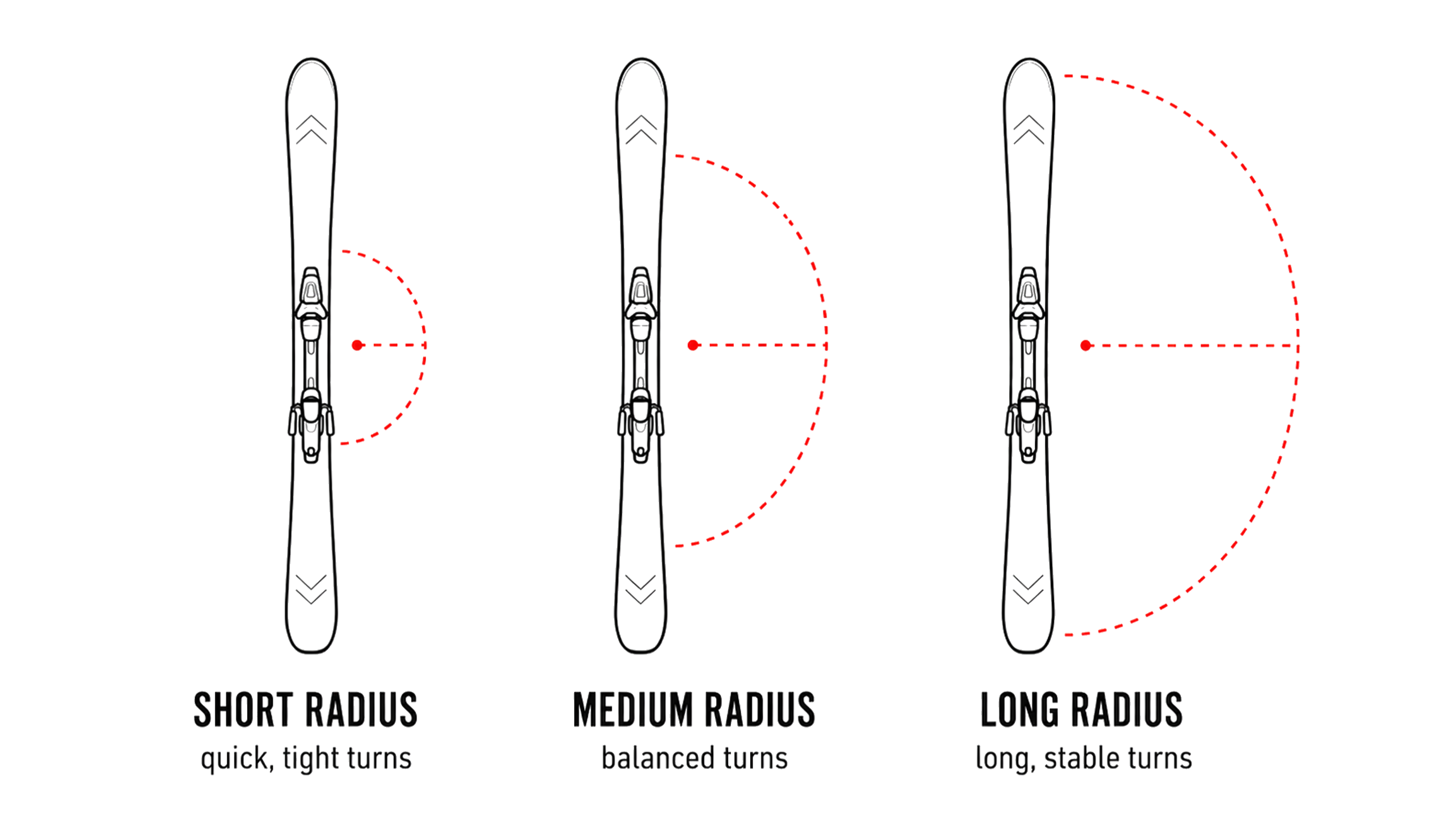
Short radius, less than 17 m: Easier to make tight, quick turns.
Medium radius, 17–22 m: A balanced ride that works for both short and longer turns.
Long radius, 22 m or more: Great for big, sweeping turns and high-speed descents.
While skis can make many kinds of turns, their sidecut radius gives you a sense of what turn shape they are best suited for.
Camber vs. Rocker: Ski Shapes Explained
Take a look at a ski from the side, and you’ll notice that it’s not completely flat. The shape of the ski’s profile is called its camber or rocker, and each profile has unique characteristics.
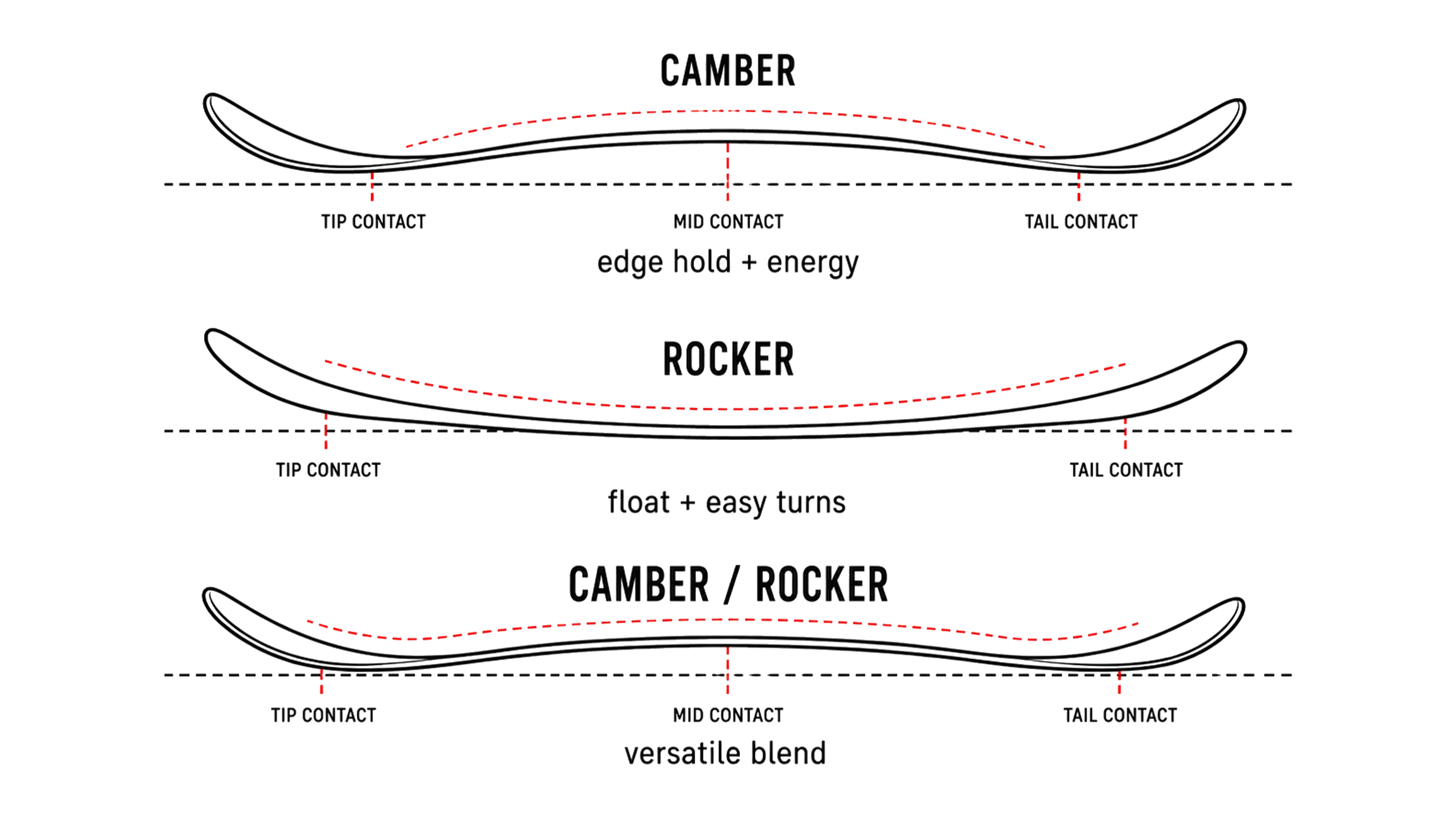
Camber: The classic shape. Cambered skis have a slight arch in the middle. When you stand on them, they flatten out, helping the edges grip the snow. Camber offers strong edge control on hard snow and a springy, lively feel from turn to turn.
Rocker: The float-friendly option. Rockered skis have tips, and sometimes tails, that curve upward earlier than traditional camber. Rocker helps with flotation in powder, easier turn initiation, and a more forgiving feel.
Camber / Rocker Blend: Many modern skis blend camber and rocker to get the best of both worlds: edge grip underfoot with easier turn initiation and better float in softer snow.
Picking the right ski comes down to understanding how width, sidecut radius, length, and shape affect your ride. Whether you're cruising groomers, skiing fast, exploring off-trail, or chasing soft snow, knowing these basics will help you find skis that match your style.
Start with all Völkl skis, or narrow it down by all mountain skis, freeride skis, freestyle skis, touring skis, or race skis.
Related Guides