Ski Sizing Guide
Choosing the right ski size is one of the most important steps in ensuring a smooth, safe, and enjoyable ride down the mountain. The perfect ski length varies from one person to another depending on several key factors like your height, weight, skiing ability, preferred terrain, and the type of skis you plan to use.
This guide will walk you through everything you need to know so you can pick the best ski length for your needs and skill level. One of the most common sizing mistakes is defaulting to whatever length you rode last season. As your ability improves or your terrain preferences change, the right ski length often changes too.
Ski Length by Height and Ability
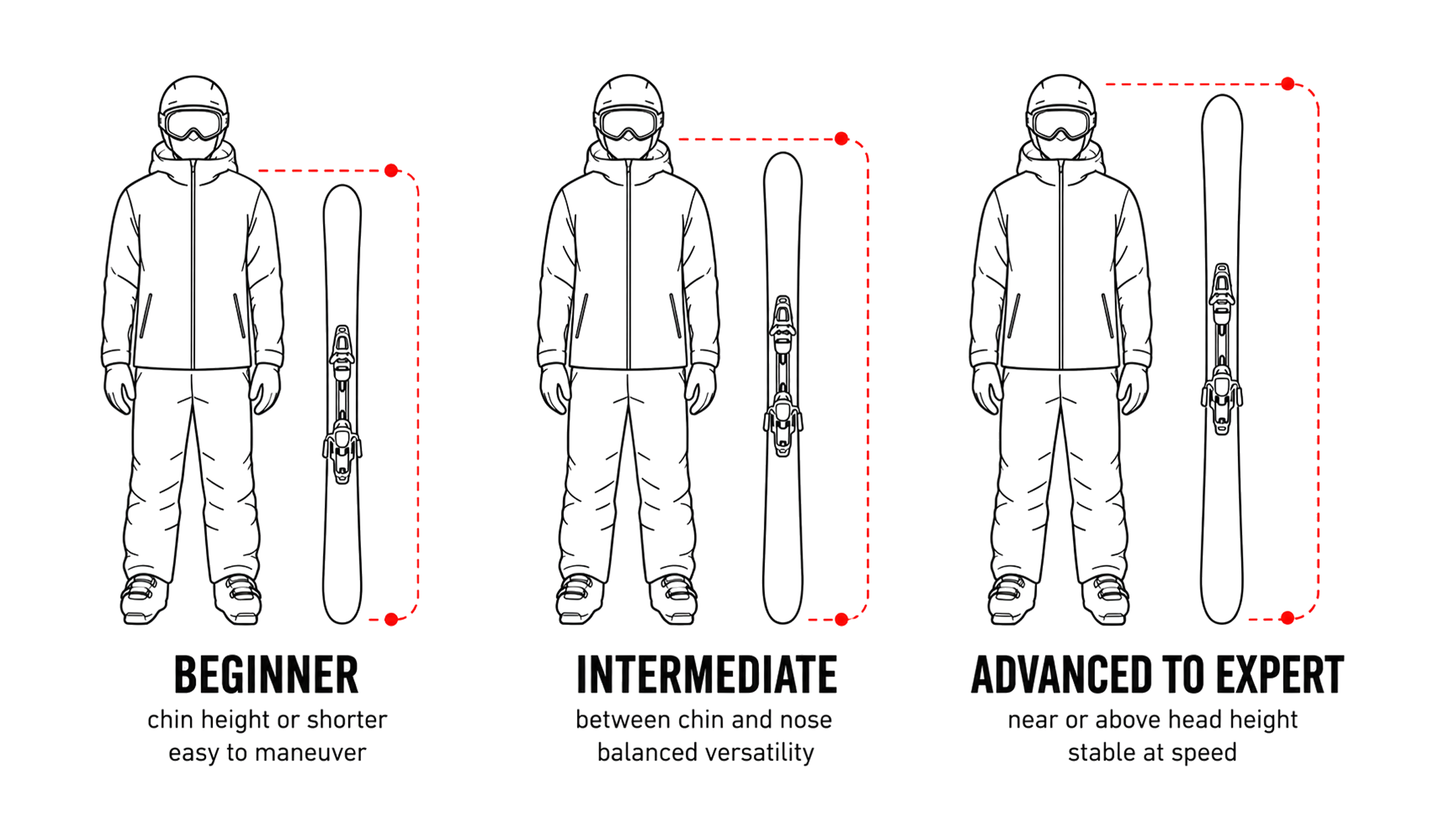
A good rule of thumb is to select skis that fall somewhere between your chin and the top of your head when standing upright. However, this is only a starting point. Fine-tuning comes by factoring in your experience level and skiing style.
| Height | Beginner (cm) | Intermediate (cm) | Advanced / Playful (cm) | Advanced / Charger (cm) |
|---|---|---|---|---|
| 4’8" / 142 cm | 125–135 | 133–140 | 138–144 | 142–150 |
| 5’0" / 152 cm | 138–148 | 148–155 | 152–158 | 156–163 |
| 5’4" / 163 cm | 148–158 | 158–165 | 163–169 | 167–173 |
| 5’8" / 173 cm | 158–168 | 168–174 | 172–178 | 176–183 |
| 6’0" / 183 cm | 168–178 | 178–184 | 182–188 | 186–193 |
| 6’4" / 193 cm | 174–184 | 184–190 | 188–194 | 192–198 |
Tip: These lengths are general suggestions. Your weight, ability, and ski type can all shift the ideal size up or down. Competitive skiers should also reference the appropriate governing body, such as FIS, for regulatory guidelines relevant to their discipline.
Adjusting Ski Length Based on Skiing Ability
Your skill level affects how much control you’ll have with a given ski length:
Beginner
Go for skis closer to chin height or even shorter.
Shorter skis are easier to maneuver, especially at low speeds.
Ideal for learning basic turns and controlling speed.
Intermediate
Opt for skis that fall between chin and nose height.
This offers more versatility for learning to carve and handle moderate terrain.
Advanced to Expert
Choose skis closer to or above head height.
Longer skis provide better stability at higher speeds and improved performance in deep snow and variable terrain.
Going Shorter vs. Going Longer
Once you know your recommended size range, there are a few good reasons to size up or down. Shorter skis tend to be easier to maneuver and turn, while longer skis offer greater stability, especially at higher speeds.
| Factor | Go Shorter | Go Longer |
|---|---|---|
| Ability | Beginner | Advanced |
| Terrain | Park, groomers (Subtract 2–5 cm for maneuverability) | Powder, freeride (Add 2–5 cm for flotation and stability) |
| Style | Slower, controlled (Subtract around 2 cm) | Fast, aggressive (Add around 2 cm) |
| Weight | Lighter than average (Size down 1–3 cm) | Heavier than average (Size up 1–3 cm for added stability) |
| Ski Profile | More camber | More rocker |
Need More Help?
Still not sure? A ski technician or shop specialist can factor in your ability, boot type, and terrain preferences to dial in the right setup. Visit one of our authorized dealers for personalized advice.
Find a dealer near you | Contact us
Related guides